

7 Paddle Boarding Safety Tips Before You Hit the Water
Think you are ready to hit the water? Check these things first.
A paddle boarding session can feel completely different once you are away from the shore. Wind direction, currents, boat wakes, and your own energy can all affect how easily you control your board and make it back.
That is why paddle boarding safety starts before you even launch. Knowing what to check and how to respond to changing conditions can help you enjoy more of your time on the water without unnecessary surprises.
Before you grab your paddle and head out, here are seven paddle boarding safety tips worth knowing.
1. Always Wear the Right Safety Gear

The right safety gear gives you more control over unexpected situations on the water. A safety vest or personal flotation device (PFD) may be required or recommended depending on the location and conditions, while a leash helps keep your board close if you fall.
The leash is particularly useful because a paddle board can drift away quickly with wind or current. Instead of swimming after your board, you can stay connected to it and use it to help you regain your position.
Before launching, check that your leash is properly attached and your equipment is in good condition. Inspect the paddle, fin, inflation level if you are using an inflatable board, and any other essential equipment.
Sun protection is also worth considering in Bali. Spending time on the water means exposure to both direct and reflected sunlight, so sunscreen, sunglasses, and suitable clothing can make a noticeable difference during longer sessions.
Good paddle boarding safety starts with equipment that is ready for the conditions you are about to face.
2. Check the Weather and Water Conditions
A beach can look calm from the shore while conditions farther out are completely different. Wind, waves, tides, and currents can affect how easily you can control your board and how much effort you need to get back to shore.
Wind deserves particular attention. Paddling with the wind can feel effortless, but the return trip may require significantly more energy when you are paddling against it.
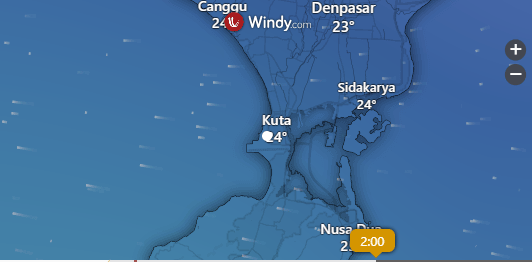
Before you launch, check the wind direction and speed along with the local weather forecast. Also look at the water itself. Strong waves, rough conditions, or noticeable currents can make a session more challenging, especially for beginners.
A useful paddle boarding safety habit is to plan your route around the return trip, not just the direction you want to explore. If conditions start getting worse during your session, head back before the water becomes difficult to manage.
3. Know How to Use Your Paddle Board
Good balance is only one part of controlling a paddle board. You also need to understand how your paddle, body position, and weight distribution affect the board.
If you are new to paddle boarding, start on your knees in shallow, calm water. This lets you get familiar with the board’s stability before standing up. Once you feel comfortable, place your feet around shoulder-width apart and keep your knees slightly bent. Your paddle helps with more than forward movement. Different stroke directions allow you to turn and adjust your position, while controlled strokes can help you slow down.
It is also useful to practice getting on and off the board before heading farther from shore. Knowing how your board responds to your movements makes it easier to react when you encounter boat wakes, small waves, or unexpected shifts in balance. Understanding your equipment is therefore an important part of paddle boarding safety, particularly during your first few sessions.
4. Stay Aware of Your Surroundings
Once you are on the water, your surroundings can change quickly. Swimmers may cross your path, boats can approach from behind, and other paddle boarders may move in different directions.
Keep scanning the area around you instead of focusing only on where you are going. Look out for swimmers, surfers, boats, rocks, buoys, and other obstacles.
Boat wakes are another thing to watch. Even after the boat itself has passed, its wake can reach you several moments later and affect your balance. If you see a wake approaching, lower your center of gravity by bending your knees and position your board so you can handle the movement more comfortably.
Local rules also matter. Some beaches have designated areas for swimmers, surfers, or watercraft. Following these restrictions helps reduce the risk of collisions and keeps different activities separated.
Staying aware of what is happening around you is one of the simplest ways to improve paddle boarding safety without limiting your experience.
5. Keep a Safe Distance From Other Water Users
Paddle boards need more space than they might appear to need. Their length, combined with the time required to change direction, means sudden movements can be difficult when you are close to someone else.
Give swimmers, surfers, kayakers, boats, and other paddle boarders enough room. Avoid crossing directly in front of moving watercraft and pay particular attention around surfing areas.
This is also important when you are still learning. Beginners may need more time to turn, stop, or regain balance, so having extra space gives you more time to react. If you are paddling in a group, avoid staying so close that your boards or paddles can collide. Keep a comfortable gap and communicate when changing direction.
6. Know What to Do If You Fall Off
Keeping your distance is a simple paddle boarding safety practice that reduces unnecessary risks while allowing everyone to enjoy the water.
Falling off your board is common when learning, but the important part is knowing how to recover safely. If you lose your balance, try to fall away from the board instead of landing directly on it. Once you are in the water, stay calm and locate your board. Your leash should keep it within reach, provided it has been correctly attached.
To get back on, approach the board from the side or rear. Hold onto the board and use your arms and legs together to pull yourself onto it. Trying to climb onto the board from the front can be more difficult because it may tip or move underneath you. Practice this technique in calm water before paddling farther offshore. It is much easier to learn the movement when you are relaxed than when you are tired or dealing with stronger conditions.
Knowing how to recover after a fall is a key part of paddle boarding safety and can make an unexpected swim much easier to handle.
7. Know Your Limits and When to Head Back
Your energy level can affect paddle boarding safety just as much as the weather.
It is easy to focus on how far you can paddle in one direction and forget that you still need enough energy for the return journey. This becomes especially important when wind or currents are working against you.
Keep your route within a distance you can comfortably manage. If you start feeling tired, notice that your balance is getting worse, or find the conditions becoming more difficult, start heading back.
You should also avoid pushing farther simply because the conditions have been good so far. Wind and weather can change during a session, and returning while you still have plenty of energy gives you more options if conditions become less favorable.
Knowing when to turn around is not about cutting your adventure short. It is a practical part of paddle boarding safety that helps you finish your session comfortably rather than turning the trip back into the hardest part of the day.
Paddle Smart and Enjoy More of the Water
The best way to approach paddle boarding safety is to make it part of your routine. Check your equipment, read the conditions, understand your board, stay aware of other water users, and know what to do if you fall.
These habits do not require advanced skills. They simply give you more control over the situations you are likely to encounter on the water.
And once the basics are covered, there is plenty to enjoy. Paddle along the coastline, explore calmer areas, work on your balance, or simply take in the view from a completely different perspective.
If you are visiting Bali and want to try paddle boarding without bringing your own equipment, Priority SUP offers SUP Board Rentals Bali so you can get on the water with the equipment you need.
Already thinking about getting your own board? Check out Shop Stand Up Paddle Board and explore the available options for your next session.
Stay aware, know your limits, and keep paddle boarding safety in mind. Then you can spend less time worrying about what might go wrong and more time enjoying where the board takes you.
