
Keep Falling Off Your Paddle Board? Try These Balance Tips
Ever feel like you’ve finally found your balance on a paddle board, only to end up in the water seconds later? Falling is a normal part of learning, and improving your paddle board balance takes practice, not perfection. A steady stance, relaxed body, and the right technique can make a big difference. Try these simple tips to stay upright and enjoy your next SUP session.

Find the Right Stance on Your Paddle Board
Your stance is the foundation of good paddle board balance, so start by keeping your feet hip-width apart and centered on the board. Keep your knees slightly bent, toes pointing forward, and avoid standing too stiffly. If standing feels difficult, start on your knees and move into position one foot at a time. Staying low and moving slowly can help you feel more stable and in control.
- Keep your feet centered: Place your feet parallel, about hip-width apart, and keep them near the middle of the board. The carry handle is a useful guide for finding the board’s center.
- Bend your knees slightly: A relaxed, slightly bent stance helps you absorb small movements from the water and keeps your body more stable than standing completely straight.
- Start from your knees: If you struggle to stand, paddle into clear, obstacle-free water first, then move one foot forward at a time before slowly lifting your chest and straightening your legs.
- Stay low as you stand: Avoid rushing upright in one movement. Keeping your body lower during the transition gives you better control and makes it easier to recover from small wobbles.
Keep Your Feet and Knees Relaxed
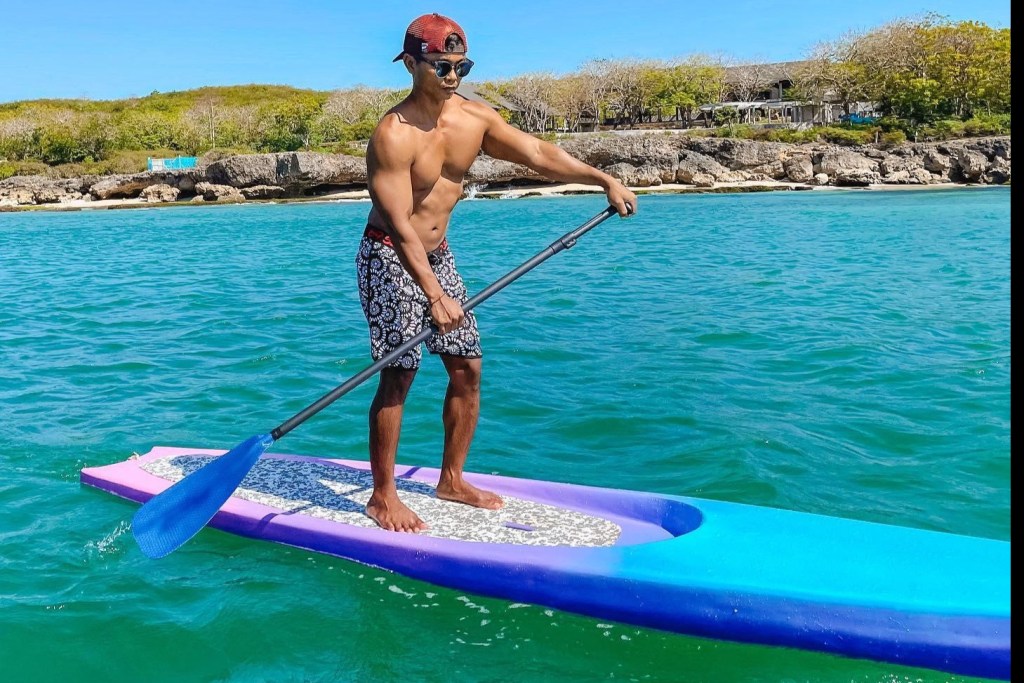
When your board starts to wobble, avoid stiffening your legs or gripping the deck with your toes. Instead, relax your feet and keep your knees slightly bent so your body can move naturally with the board. Let your knees absorb small movements in the water rather than fighting every ripple. A relaxed stance can make paddle board balance feel more natural and comfortable.
Your feet do not need to stay tense while you paddle. Every so often, relax or move your toes to reduce tension, especially during longer sessions. Staying loose helps your body respond to changes in the water more easily. The more comfortable you become with small movements, the easier it is to stay balanced.
Focus on Your Core and Body Posture
Good paddle board balance comes from using your whole body, not just your feet. Keep your back straight, shoulders relaxed, and eyes on the horizon instead of looking down at your feet. Use your hips and core to make small weight shifts when the board moves, rather than leaning too far with your shoulders. Stay relaxed and let your body move naturally with the board.
Learn to Paddle Without Losing Balance
Once you’re standing comfortably, your paddle can help improve stability instead of making balance harder. Keep it in the water when needed and use slow, controlled strokes while maintaining a light grip. If switching sides makes you wobble, pause and steady yourself before moving the paddle. Smooth, relaxed movements can help build confidence and improve your paddle board balance.
- Use the paddle for support: Keeping the paddle blade in the water can give you an extra point of stability when the board feels unsteady.
- Take slow strokes: Focus on controlled movements instead of powerful strokes, especially while you are still getting comfortable on the board.
- Keep a light grip: Hold the paddle comfortably without squeezing it too tightly, which can help you paddle more smoothly.
- Switch sides slowly: Before moving the paddle to the other side, steady your feet and posture first, then make the change smoothly.
Practice on Calm Water First
For beginners, calm and flat water makes it easier to practice your technique and paddle board balance. Start with gentle conditions before moving on to stronger waves, currents, or more challenging areas. Always check the weather, wind, water conditions, your ability, and safety equipment before heading out. If you want to practice without buying your own board, SUP Board Rentals Bali from Priority SUP is a simple way to get started.
Calm water also gives you more time to focus on your stance, paddling rhythm, and paddle board balance. Once you feel comfortable, you can slowly explore different conditions and build your skills. Taking it step by step can make each session feel easier and more enjoyable. With regular practice, you’ll gain confidence on the board.
Know What to Do When You Start Losing Balance
Falling off your paddle board is a normal part of learning, so don’t see it as a failure. If you lose your paddle board balance, try to fall into the water away from the board rather than onto it. Once you’re in the water, stay calm, hold onto the board when safe, and use the handle to climb back on. Take a moment to kneel and regain your balance before standing again.
- Stay calm: Falling can feel surprising, but staying relaxed makes it easier to recover and get back on your board.
- Fall away from the board: If you cannot regain your paddle board balance, aim for the water rather than landing directly on the board.
- Hold your board: Keep the board close when practical, then use its carry handle to help you climb back on.
- Reset before standing: Get into a stable kneeling position first, then stand slowly when you feel ready.
- Use proper safety gear: Wear appropriate safety equipment, including a life jacket when required or appropriate, and follow local paddling rules.
Practice Makes Better Balance
There’s no magic trick for mastering SUP, but regular practice can make a big difference. Your paddle board balance improves as you learn how your body and board respond to the water. Start with a centered stance, relaxed knees, steady posture, and controlled strokes. As you gain confidence, you can slowly try longer paddles and different water conditions.
Ready to get back on the board? Try Priority SUP and build your skills one session at a time. When you’re ready for your own board, check out Shop Stand Up Paddle Board. Find your balance, catch the rhythm, and enjoy the ride. Keep paddling!
